


Clear aligner treatment involves more than designing a digital smile simulation and manufacturing a series of transparent trays. Every case requires careful treatment planning, an understanding of orthodontic biomechanics and regular clinical assessment to ensure that the planned tooth movements are progressing appropriately.
For dentists and orthodontists, choosing the right clear aligner system is therefore an important clinical decision. While aligner quality and manufacturing capabilities matter, the availability of clinical support can also influence how effectively different cases are planned and managed. This is where Clinical Support Matters, particularly when managing cases with varying biomechanical requirements.
From attachment selection and movement staging to treatment monitoring and refinements, clinical guidance plays an important role throughout aligner therapy. Understanding these aspects can help dental professionals select a clear aligner manufacturer that supports both their clinical requirements and treatment workflow.
Why Is Clinical Support Important in Clear Aligner Treatment?
Clear aligner therapy depends on the controlled application of orthodontic forces to achieve specific tooth movements. However the actual expression of these movements can vary depending on tooth morphology, periodontal support, aligner fit and individual biological responses.
A digital treatment plan provides a proposed sequence of movements, but clinical evaluation is necessary to determine whether the planned movements are appropriate and achievable.
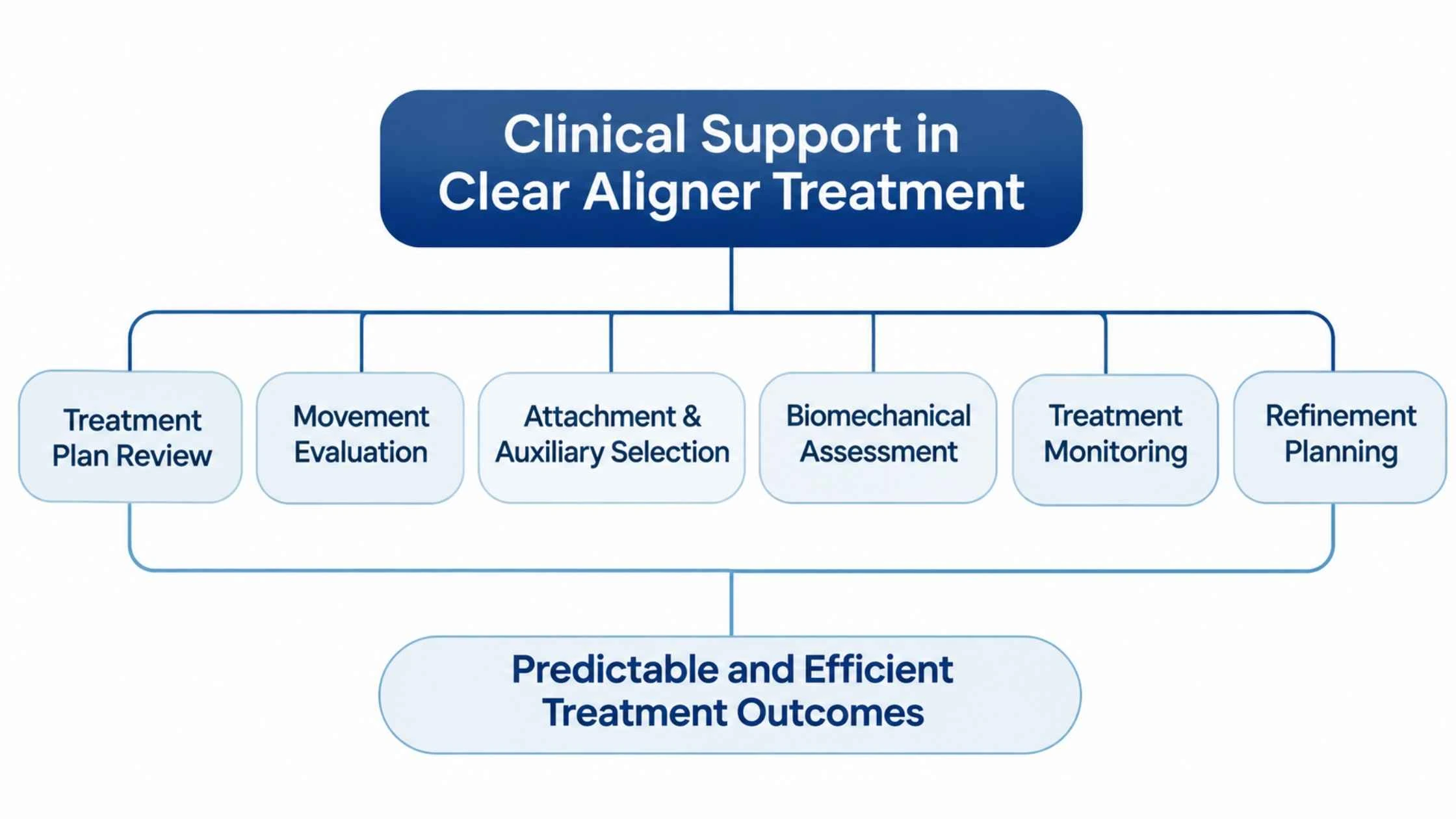
Clinical support helps dentists and orthodontists with:
- Reviewing digital treatment plans before aligner fabrication.
- Evaluating the suitability of planned tooth movements.
- Selecting appropriate attachments and auxiliaries.
- Identifying potential biomechanical limitations.
- Assessing treatment progress and aligner tracking.
- Planning refinements when the desired movements are not fully achieved.
A structured clinical support system allows practitioners to approach treatment planning with greater clarity while retaining control over diagnosis and clinical decisions. These considerations explain why Clinical Support Matters throughout the different stages of aligner therapy.
Clinical Treatment Planning: The Foundation of Predictable Outcomes
Accurate treatment planning is one of the most important aspects of clear aligner therapy. Before approving a digital setup, clinicians should evaluate the patient’s dental condition, occlusal relationships, periodontal health and overall orthodontic requirements.
The treatment plan should consider more than the final tooth positions displayed in a digital simulation. It should also establish how the required movements will be achieved.
Important considerations include:
- Initial tooth positions and the type of malocclusion.
- Required rotations, intrusion, extrusion and root movements.
- Anchorage requirements and movement sequencing.
- Attachment placement and auxiliary selection.
- Interproximal reduction (IPR), where clinically indicated.
- Space management and occlusal considerations.
A well-planned digital setup should follow a logical sequence of tooth movements and account for the biomechanical requirements of the case.
This is where orthodontist-led treatment planning becomes particularly valuable. Clinical review can help identify potential limitations before aligner manufacturing begins, reducing the likelihood of overlooking important treatment considerations. It also demonstrates why Clinical Support Matters before treatment initiation, rather than only when complications arise.
Understanding Biomechanics and Tooth Movement in Clear Aligners
One of the key challenges in clear aligner treatment is achieving the intended expression of individual tooth movements. Although digital platforms allow clinicians to programme different movements, their clinical predictability can vary.
Rotations, extrusion, intrusion, root torque and bodily movement each involve different biomechanical requirements.
Role of Attachments in Tooth Movement
Attachments improve aligner engagement with the tooth surface and help facilitate specific movements. Their shape, orientation and positioning should be selected according to the intended biomechanical objective.
For example, certain attachment configurations may assist with rotational control, while others may be considered when managing extrusion or root movement.
Understanding the application of vertical and horizontal attachments is therefore important when developing an effective aligner treatment plan.
Managing Root Torque and Complex Movements
Root torque is another important consideration in clear aligner therapy. Achieving the desired root position requires appropriate force application, aligner engagement and careful treatment staging.
Clinicians should evaluate whether the proposed digital setup accounts for the required root movement rather than relying solely on the visible crown position.
A clear understanding of root torque predictability and tooth movement mechanics can help practitioners assess the biomechanical requirements of individual cases.
Clinical support is particularly useful when a treatment plan involves movements that may require additional attachments, auxiliaries or modifications to the original setup. This is another area where Clinical Support Matters for managing biomechanical requirements effectively.
Case Selection: Matching Aligner Treatment to Clinical Requirements
Not every orthodontic case presents the same level of complexity. The suitability of clear aligner therapy depends on the type of malocclusion, required tooth movements and individual clinical conditions.
Before initiating treatment, dentists and orthodontists should assess:
- Severity of crowding or spacing.
- Sagittal, transverse and vertical discrepancies.
- Tooth rotations and root positioning requirements.
- Periodontal health and available alveolar support.
- Anchorage requirements.
- The need for additional attachments or auxiliaries.
Cases involving complex rotations, significant vertical corrections, substantial root movement or challenging anchorage requirements may need more detailed planning.
The clinical evidence on clear aligner treatment also highlights the importance of understanding treatment indications, advantages and potential limitations.
Clinical support can help practitioners evaluate these requirements and consider appropriate treatment approaches. However, final case selection and treatment decisions must always remain with the treating clinician.
Monitoring Aligner Tracking During Treatment
Even with a carefully prepared treatment plan, actual tooth movement may not always follow the digital simulation exactly. This makes regular monitoring an essential part of clear aligner therapy.
Tracking refers to how closely the teeth follow the movements programmed in the treatment plan. When tooth movement does not progress as expected, the aligner may show incomplete seating or a visible gap between the appliance and tooth surface.
Common issues that require clinical assessment include:
- Incomplete aligner seating.
- Loss of attachment engagement.
- Rotations that are not progressing as planned.
- Incomplete expression of programmed movements.
- Differences between planned and actual tooth positions.
- Changes in occlusal relationships.
Regular clinical examinations and updated digital records, where indicated, help practitioners identify these discrepancies.
A structured monitoring process can also support timely treatment modifications. The frequency and method of assessment should be determined according to the individual case and clinical requirements. Consistent monitoring further reinforces why Clinical Support Matters beyond the initial treatment planning stage.
Why Refinement Support Matters in Clear Aligner Therapy
Refinement is an important stage of clear aligner treatment. At the end of the initial aligner sequence, some movements may remain incomplete or require further correction.
Common findings may include residual rotations, incomplete space closure, insufficient torque expression or minor occlusal discrepancies.
A systematic refinement process generally involves:
- Reassessing the current clinical condition.
- Taking updated intraoral scans or records when required.
- Comparing achieved movements with the original treatment objectives.
- Identifying movements that require further correction.
- Reviewing attachment and auxiliary requirements.
- Preparing a revised treatment setup and additional aligners.
Refinement planning should be based on clinical findings rather than simply completing the prescribed number of aligners.
For dentists and orthodontists, access to a clear refinement protocol and technical assistance can make it easier to manage residual movements and maintain continuity throughout treatment.
What Should Dentists Look for in a Clear Aligner Manufacturer?
When selecting a clear aligner manufacturer, clinicians should evaluate more than the appliance material or digital treatment platform. The level of clinical and technical support available is equally important.
The following factors can help dental professionals assess an aligner system:
| Evaluation Factor | What Dentists Should Consider |
| Treatment Planning | Is clinical guidance available during digital setup review? |
| Biomechanics | Are movement staging, attachments and auxiliaries considered? |
| Case Assessment | Is support available for evaluating complex cases? |
| Monitoring | Is there a structured approach to reviewing treatment progress? |
| Refinement | Are refinement protocols and additional aligner planning supported? |
| Manufacturing | Is there consistency between the approved setup and fabrication process? |
| Technical Support | Can clinicians access assistance for case-related queries? |
| Workflow | Is there a clear process from case submission to treatment completion? |
A manufacturer that combines consistent production with clinical guidance can provide a more comprehensive support structure for dental professionals.
How Clinical Support Contributes to a Better Aligner Workflow
Clinical support is not limited to the initial treatment plan. It extends across the different stages of aligner therapy, including case submission, digital setup approval, manufacturing, monitoring and refinement.
A coordinated workflow helps practitioners manage case-related requirements more efficiently and address clinical queries when they arise.
For example, Elencia Aligners incorporates orthodontist-led treatment planning, BioForce Aligners, Smart Auxiliaries, a Smart Monitoring System and a Refinement Assurance Program as part of its clinical support approach.
These features are intended to support different stages of the aligner workflow, from treatment planning to monitoring and refinement.
For dental professionals evaluating a clear aligner system, understanding how these support mechanisms fit into their clinical practice is an important part of the selection process.
Conclusion
Choosing a clear aligner system involves more than evaluating manufacturing quality and digital treatment capabilities. Clinical Support Matters because it contributes to treatment planning, biomechanical assessment, case monitoring and refinement.
For dentists and orthodontists, access to appropriate clinical guidance can help address case-specific requirements and support a more structured approach to aligner therapy.
A reliable clear aligner system should therefore combine manufacturing capabilities with a clinical support process that complements the expertise and treatment decisions of the practitioner.
Frequently Asked Questions
1. Why is clinical support important when choosing a clear aligner system?
Clinical support helps dentists and orthodontists with treatment planning, biomechanical assessment, attachment selection, monitoring and refinement. It provides additional guidance throughout the different stages of aligner therapy.
2. What should dentists look for in a clear aligner manufacturer?
Dentists should evaluate treatment planning support, manufacturing consistency, clinical guidance, attachment and auxiliary options, monitoring protocols, refinement support and technical communication.
3. How do attachments improve clear aligner treatment?
Attachments improve aligner engagement with tooth surfaces and help facilitate specific movements, including rotation, extrusion and certain types of root control. Their design and positioning should be based on the clinical requirements of the case.
4. What is aligner tracking, and why is it important?
Aligner tracking refers to how closely actual tooth movements correspond with the programmed treatment plan. Monitoring tracking helps clinicians identify incomplete movements, aligner fit issues and cases that may require modification.
5. Why are refinements required in clear aligner treatment?
Refinements may be required when certain planned movements remain incomplete after the initial aligner sequence. Updated records and clinical reassessment help determine the additional movements and aligners needed to achieve the treatment objectives.