


Have you ever switched to a new aligner tray and felt pressure or soreness in your teeth? You are not alone. Many people experience some discomfort when starting a new set of clear aligners. This happens because each new tray is designed to move your teeth gradually into their planned positions. While mild pressure is usually part of the process, sharp or ongoing pain should not be ignored. Understanding why your teeth feel sore, how long the discomfort may last and what you can do to manage it can make your aligner journey more comfortable.
1. Why Does a New Aligner Tray Cause Tooth Pain?
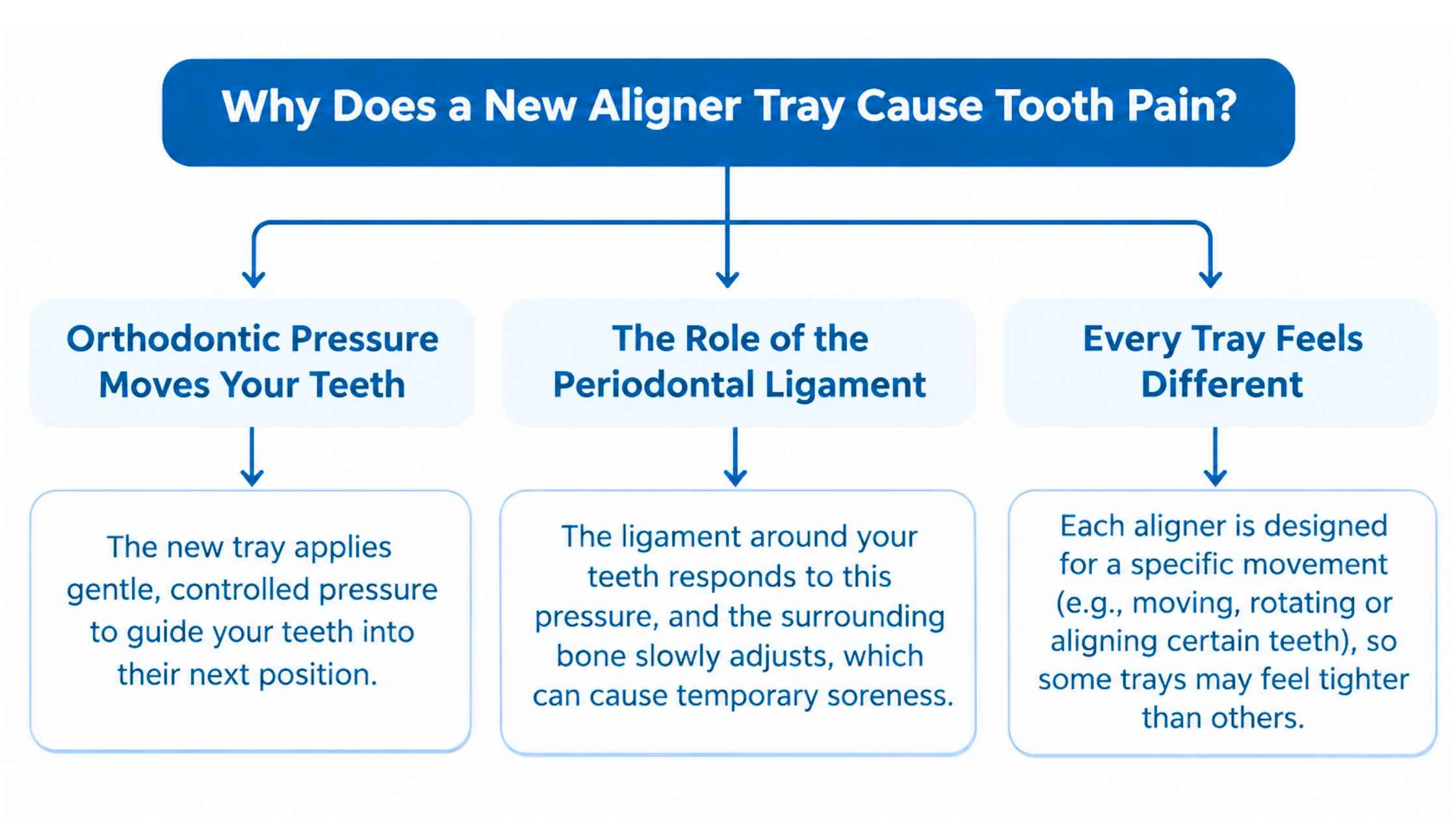
Clear aligners are designed to move your teeth through small, planned steps. Each new tray is slightly different from the previous one because it guides your teeth towards their next positions. This is how clear aligner treatment gradually improves tooth alignment.
Here is why you may feel discomfort:
How Orthodontic Pressure Moves Your Teeth
When you wear a new aligner, it applies gentle, controlled pressure to selected teeth. This pressure helps guide them towards their planned positions over time. Your teeth and the surrounding tissues need time to adjust to these changes, which can cause temporary soreness.
What Happens to the Periodontal Ligament?
The periodontal ligament is a soft tissue that connects your teeth to the surrounding bone. When your teeth move, this ligament responds to the pressure. The surrounding bone also changes gradually to allow the movement. These natural changes can make your teeth feel tender, especially when biting or chewing.
Why Does Every New Aligner Tray Feel Different?
Not every tray moves your teeth in the same way. One set may focus on moving your front teeth, while another may work on rotation or other movements. This is why some trays may feel more uncomfortable than others.
2. Is It Normal for Your Teeth to Hurt After Changing Aligners?
Yes, mild pressure and tenderness are common when you switch to a new aligner. You may notice tightness when putting the tray on or slight sensitivity while eating.
However, not every type of pain should be considered normal.
| Normal Aligner Discomfort | Signs That Need Attention |
| Mild pressure or soreness | Sharp or severe tooth pain |
| Temporary sensitivity while chewing | Pain that keeps getting worse |
| Tightness when wearing a new tray | Swelling or significant gum irritation |
| Discomfort that gradually improves | A tray that does not fit properly |
Research comparing clear aligners with fixed orthodontic appliances has also examined differences in patient discomfort. A randomised clinical study published in Medical and Pharmaceutical Reports included clear aligner patients and assessed discomfort at different time points.
If you notice severe pain, swelling or discomfort that does not improve, contact your orthodontist for an assessment.
3. How Long Does Aligner Pain Last After Switching Trays?
The duration of discomfort can vary from person to person. Many patients notice the most pressure during the first day or two after changing trays. For others, mild tenderness may continue for a few more days.
Here is what you may experience:
- First 24 hours: Your teeth may feel tight or tender as they adjust to the new tray.
- Next 24–48 hours: Pressure may gradually reduce, although chewing can still feel uncomfortable.
- Following days: Your teeth may begin to feel more comfortable as they adjust to the new movements.
An Indian research study published in Bioinformation compared pain perception in patients undergoing fixed orthodontic treatment and clear aligner treatment. The findings reported lower pain levels among clear aligner patients, particularly during the initial stages of treatment. You can read the comparative study on orthodontic pain perception.
These studies provide general information about orthodontic discomfort, not a fixed timeline for every new aligner change.
There is no fixed timeline for everyone. If the pain becomes worse or continues without improvement, speak with your orthodontist.
4. Why Does One Tooth Hurt More With a New Aligner?
Sometimes, you may notice that only one or two teeth feel sore after changing trays. This does not always mean something is wrong.
Here are a few possible reasons:
- Different tooth movements: Some teeth may need more movement than others during a particular stage.
- Tooth rotation: Teeth that need to turn or change position may experience different pressure.
- Individual sensitivity: Some teeth may naturally feel more sensitive than others.
However, if one tooth has sharp, constant or worsening pain, it is important to have it checked by your orthodontist.
5. Why Does Your New Aligner Feel Too Tight or Not Fit Properly?
A new aligner may feel tighter than expected, but it should still fit according to your treatment plan.
Some possible reasons include:
- Insufficient wear of the previous tray: Not wearing your aligner for the prescribed hours may affect how your teeth respond to the next set.
- Teeth not tracking as planned: Sometimes, teeth do not move exactly as expected, making the next tray difficult to seat. This may indicate aligner tracking issues.
- Missing attachments: If an attachment becomes loose or falls off, the aligner may not work as intended.
- Damaged aligners: A cracked, bent or damaged tray may not fit correctly.
Never force a tray into place or move to the next set without professional advice if the fit seems incorrect.
6. Seven Ways to Manage Discomfort When Switching to a New Aligner
A few simple habits can help make the adjustment period easier.
- Follow your prescribed schedule: Wear your aligners for the recommended number of hours each day and change trays only as instructed. Follow the correct aligner-wearing instructions.
- Use orthodontic chewies if recommended: These small seating aids can help your aligners sit properly over your teeth.
- Choose softer foods: Foods such as yoghurt, mashed potatoes, soft rice and soups can be easier to eat when your teeth feel tender.
- Avoid unnecessary tray removal: Taking your aligners out for longer than recommended can affect treatment progress.
- Maintain good oral hygiene: Brush and floss regularly to keep your teeth and gums healthy.
- Avoid modifying your aligners: Do not cut, bend or file your trays yourself. Ask your orthodontist if an edge is irritating your mouth.
- Ask about suitable pain relief: If the discomfort is difficult to manage, consult your healthcare professional or orthodontist about appropriate options.
7. When Should You Contact Your Orthodontist About Aligner Pain?
Mild pressure is expected during treatment, but certain symptoms need professional attention.
Contact your orthodontist if you experience:
- Severe or worsening tooth pain.
- Swelling, bleeding or significant gum irritation.
- A new aligner that does not fit properly.
- An attachment that has fallen off.
- Pain that does not gradually improve.
Your orthodontist can check whether your teeth are following the planned movements and whether any changes to your treatment are needed.
8. How Does Orthodontist-Led Monitoring Help During Aligner Treatment?
Clear aligner treatment involves more than simply changing trays. Your teeth need to be monitored to check whether they are moving as planned.
Regular orthodontic assessments help identify problems with aligner fit, attachments and tooth movement.
At Elencia Aligners, orthodontist-led treatment planning and the Smart Monitoring System support the evaluation of treatment progress. Digital superimpositions help compare tooth positions over time, while the Refinement Assurance Program supports additional treatment planning when refinements are clinically needed.
Accurate clinical records and impressions also play an important role in planning aligner treatment. This includes the impression process for clinicians, which supports the collection of dental records needed for treatment planning.
This structured approach helps keep treatment progress under professional supervision.
9. Frequently Asked Questions About New Aligner Tray Pain
Why Do Your Teeth Hurt Every Time You Change Aligner Trays?
Each new tray is designed to guide your teeth through another stage of movement. The pressure created during this process can cause temporary tenderness.
Why Does One Tooth Hurt More Than the Others With Aligners?
Different teeth may be undergoing different movements. However, persistent or sharp pain in one tooth should be checked by your orthodontist.
Should You Remove Your Aligners When Your Teeth Hurt?
Do not stop wearing your aligners just because of mild pressure. Follow your prescribed wearing schedule. If you experience severe pain, contact your orthodontist for advice.
Can You Switch to the Next Tray If Your Teeth Are Still Sore?
Follow the changing schedule given by your orthodontist. Do not move ahead or extend a tray’s use without professional guidance.
What Should You Do If Your New Aligner Does Not Fit Properly?
Avoid forcing it into place. Check for visible damage and contact your orthodontist to assess the fit.
Does Aligner Pain Mean Your Teeth Are Moving Correctly?
Not necessarily. Mild pressure can occur during tooth movement, but pain alone does not confirm that treatment is progressing as planned. Regular orthodontic monitoring is important.
Conclusion
Experiencing some discomfort when switching to a new aligner tray is common. It usually happens because your teeth are adjusting to their next planned movements. Following your prescribed wearing schedule, maintaining good oral hygiene and using recommended seating aids can help make the experience more comfortable. However, severe, persistent or worsening pain should never be ignored. If you have concerns about your aligner fit or tooth movement, speak with your orthodontist to keep your treatment on track.