
In the evolving world of orthodontics, clear aligners have transformed not just how we treat patients, but how we think about treatment planning. Today, success is no longer defined by the appliance alone, but by how intelligently we select the case. In fact, aligner case selection has emerged as the single most critical determinant of clinical outcomes. As one orthodontic principle rightly puts it:
“Right case, right plan, right compliance, this is the formula for aligner success.”
Clear aligners offer aesthetics, comfort, and convenience, but they are not universally suitable. A well-selected case can deliver predictable, efficient outcomes, while a poorly selected one can lead to refinements, delays, or even treatment failure. Studies show that around 70–85% of appropriately selected cases achieve planned outcomes, whereas complex or poorly selected cases may drop to 40–50% success rates.
This highlights a crucial reality: mastering aligner case selection is not optional—it is foundational.
Understanding Aligner Case Selection

Aligner case selection refers to the clinical and behavioral evaluation process used to determine whether a patient is an ideal candidate for clear aligner therapy. It combines diagnosis, biomechanics, patient psychology, and technological planning.
Modern orthodontics demands a shift from “Can I treat this case?” to:
“Should this case be treated with aligners?”
This is where case selection for clear aligners becomes both an art and a science.
Why Aligner Case Selection Matters
The importance of aligner case selection lies in its direct impact on:
- Treatment predictability
- Patient satisfaction
- Chair time and refinements
- Long-term stability
Clinical data reveals that even with advanced systems, 25–30% of cases may require refinements or additional aligners due to planning inaccuracies or case complexity.
A strong foundation in orthodontic case selection aligners helps clinicians:
- Avoid mid-treatment complications
- Set realistic expectations
- Optimize treatment timelines
Key Factors in Case Selection for Clear Aligners
1. Malocclusion Severity
The first and most critical step in case selection for clear aligners is evaluating the complexity of malocclusion.
Ideal cases include:
- Mild crowding (1–3 mm)
- Mild spacing
- Normal overjet and overbite
These cases can achieve up to 90%+ success rates with aligners.
Challenging cases include:
- Severe rotations (>20°)
- Deep bites
- Skeletal discrepancies
Such cases often require hybrid or fixed appliance approaches.
2. Patient Selection for Aligner Therapy
No matter how perfect the case appears clinically, success heavily depends on patient selection for aligner therapy.
Compliance is the hidden variable. Research shows:
- Patients wearing aligners 22+ hours/day → 85–90% success
- Less than 16 hours/day → success drops to 40–50%
Ideal patients are:
- Motivated
- Disciplined
- Aesthetically driven
- Willing to follow instructions
This makes patient selection for aligner therapy just as important as clinical diagnosis.
3. Clear Aligner Treatment Planning
Once a case is selected, clear aligner treatment planning determines execution success.
This involves:
- Digital simulations
- Staging of tooth movement
- Attachment placement
- IPR planning
While digital setups are powerful, they are not perfect. Around 85–90% of movements fall within predicted accuracy, but deviations increase in complex cases.
Hence, clinicians must balance software predictions with biological reality.
4. Periodontal and Biological Considerations
Healthy periodontal support is essential. Ideal candidates typically have:
- Probing depth <4 mm
- No active periodontal disease
- Good oral hygiene
Ignoring these factors during aligner case selection can compromise outcomes and stability.
5. Growth and Age Factors
Aligners work best in:
- Adults
- Late adolescents with completed growth
Younger patients may require growth modification strategies, making orthodontic case selection aligners more complex.
Clinical Example: The Difference Case Selection Makes
Case A: Ideal Candidate
- 24-year-old patient
- Mild crowding (2 mm)
- Good compliance
Result: Completed in 8 months with minimal refinements
Case B: Poorly Selected Case
- Severe rotation + deep bite
- Low compliance
Result: Extended treatment + switched to braces
This illustrates a simple truth:
Aligners don’t fail, poor case selection does.
The Role of Technology & Brands
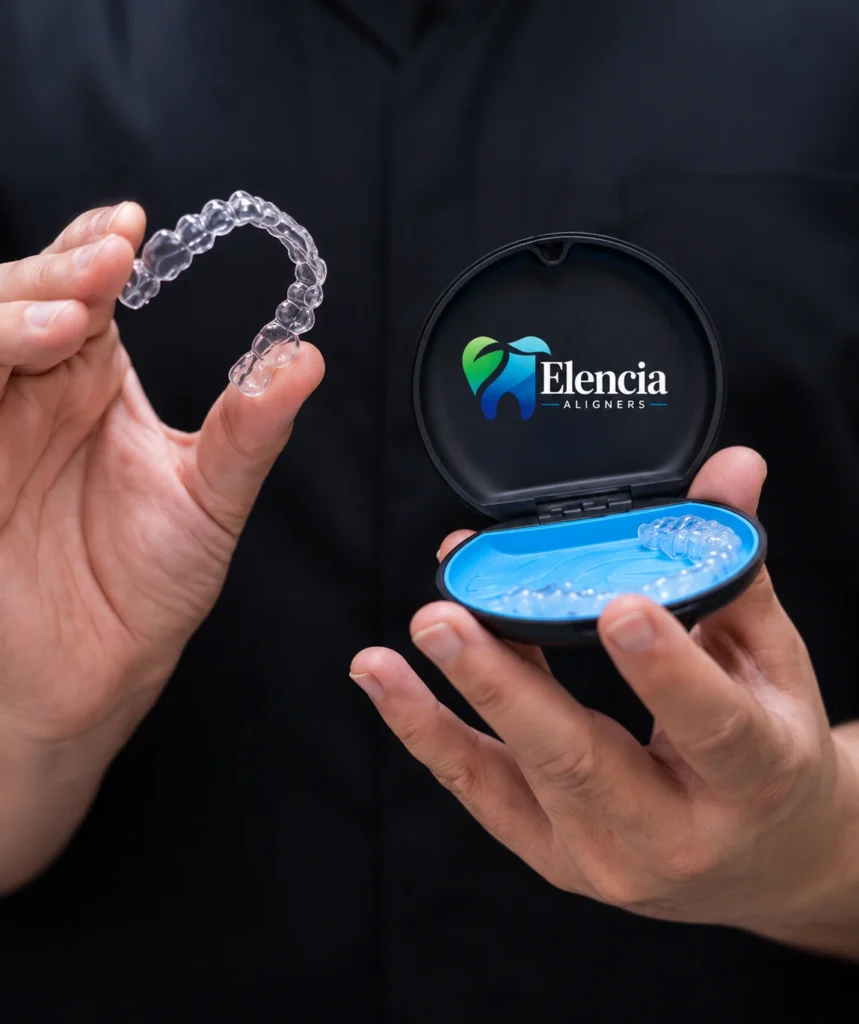
Modern aligner systems like Elencia Aligners are enhancing precision with advanced materials and digital workflows. However, even the most advanced systems rely on accurate aligner case selection and expert planning.
As widely emphasized in orthodontics:
“Technology enhances outcomes, but diagnosis defines them.”
Common Mistakes in Aligner Case Selection
Avoid these pitfalls:
- Overestimating aligner capabilities
- Ignoring patient compliance
- Relying solely on software predictions
- Accepting borderline cases without planning refinements
- Poor communication of expectations
These mistakes directly affect clear aligner treatment planning and overall success.
How to Improve Your Case Selection
To master aligner case selection, focus on:
- Standardized diagnostic protocols
- Case classification systems
- Continuous learning and case reviews
- Combining digital planning with clinical judgment
Clinicians who refine their case selection for clear aligners consistently report:
- Reduced refinements
- Better patient satisfaction
- Improved efficiency
The Future of Aligner Case Selection
With advancements in AI and digital orthodontics, aligner case selection is becoming more data-driven. Emerging systems analyze:
- Tooth movement predictability
- Patient compliance patterns
- Biomechanical feasibility
However, human expertise remains irreplaceable. The aligners treatment process at Elencia is designed to be simple, precise, and highly personalized. It begins with a detailed consultation and advanced 3D scanning, followed by a customized treatment plan that maps every stage of your smile transformation for predictable results. This peer-reviewed research article on ScienceDirect provides in-depth scientific insights backed by rigorous methodology and data analysis. As part of Elsevier’s trusted research platform, it contributes valuable findings that support evidence-based understanding and informed decision-making across its respective field.
Conclusion
Mastering aligner case selection is the cornerstone of modern orthodontic success. It is not just about identifying treatable cases, but about selecting predictable, manageable, and compliant cases. When combined with strong clear aligner treatment planning, proper patient selection for aligner therapy, and evolving technologies like Elencia Aligners, clinicians can achieve exceptional outcomes. In the end, the future of orthodontics belongs not just to those who adopt aligners, but to those who master aligner case selection. Have questions or ready to get started? Connect directly with the Elencia Aligners team through our contact page and receive prompt assistance for your queries, treatment support, or partnership opportunities.
“In aligner therapy, success is planned before the first tray is ever worn.”