
Yes, interproximal reduction (IPR) is a safe and effective orthodontic procedure when performed according to appropriate clinical protocols. Many years of clinical research show that conservative enamel reduction, followed by appropriate finishing and polishing, can be carried out without adverse effects. Clinical evidence accumulated over the last two decades has shifted the discussion from if IPR is safe to how it should be performed. Several peer-reviewed studies suggest that when IPR follows standardized protocols, it remains conservative, biologically compatible, and provides controlled space for orthodontic treatment. Accurate diagnosis, calibrated measurement, staged reduction, and meticulous polishing are key to predictable long-term outcomes.
Understanding Interproximal Reduction
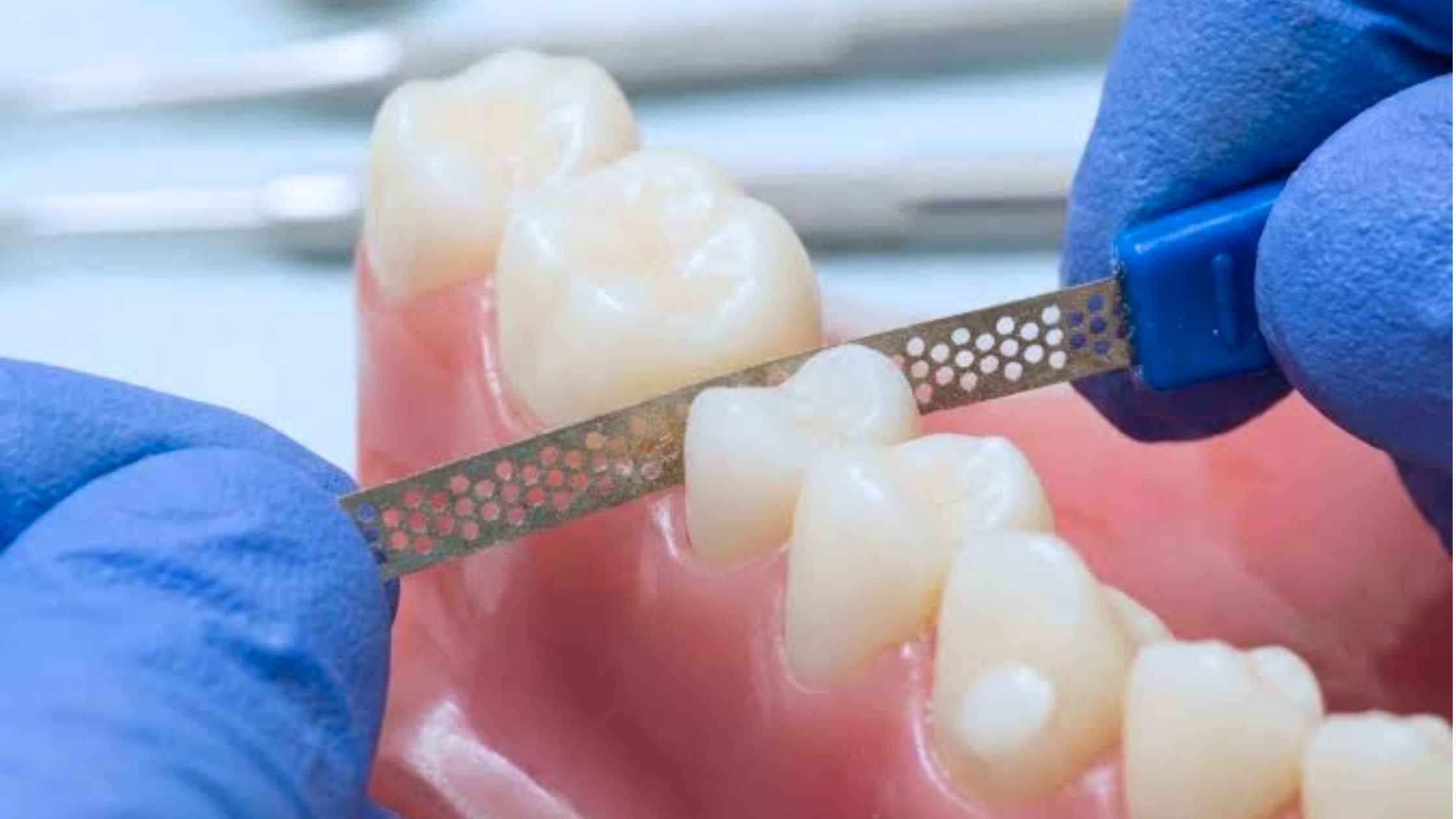
Interproximal reduction (IPR) is the regulated reduction of enamel from the proximal surfaces of the teeth, often described as slenderization or enamel reproximation. While its primary purpose is to create space, IPR also helps resolve mild to moderate crowding, improve tooth alignment, reduce black triangles, correct Bolton discrepancies, enhance final occlusal stability, and avoid extractions in selected cases. Typically, 0.1 mm to 0.5 mm of enamel is removed per contact, depending on tooth anatomy and treatment goals. A 2022 systematic review found no evidence of increased enamel demineralization, dental caries, periodontal disease, or long-term tooth sensitivity when IPR is performed according to recommended orthodontic protocols.
What Does Clinical Research Say About IPR Safety?
The modern literature consistently supports that properly executed IPR is safe.
Among the few well-designed long-term clinical trials, it has been reported:
- No marked rise in caries incidence
- There was no increase in periodontal issues that could be measured
- Comparable enamel hardness after polishing
- Stable tooth vitality
- Excellent long-term orthodontic stability
It has also been shown that polished enamel surfaces may demonstrate patterns of plaque accumulation comparable to non-treated enamel; thus, finishing is more crucial than constriction. Current evidence indicates that technique quality, rather than enamel reduction, is the true determinant of biological innocuity.
Why Controlled Enamel Reduction Remains Biologically Acceptable
The hardest tissue within the body is human enamel.
Because conservative orthodontic IPR removes a selective volume from specific contact points, the remainder of enamel typically acts as sufficient barrier against excess occlusal forces. Several factors are taken into account during clinical planning prior to making any reduction.
- Initial enamel thickness
- Patient age
- Tooth morphology
- Existing restorations
- Caries risk
- Occlusion
- Overall treatment objectives
This allows you to remove less enamel and gives you the best chance of achieving optimal treatment outcomes.
Clinical Precision Is More Important Than Quantity
A common misconception is that success with IPR is contingent on taking off an exact number of millimeters of enamel. Success in IPR, in fact, is contingent on accuracy. Reduction is continually verified rather than estimated by eye by seasoned clinicians.
Best Clinical Practices
- Orthodontic protocols generally recommend:
- Do IPR incrementally, not all reduction in one visit.
- Diminish the estimation more than once amid the interaction.
- Maintain excellent visibility and isolation.
- Polish every treated surface thoroughly.
- Follow the digital treatment process to the letter.
- After creating a lot of space, rethink the aligner tracking.
These principles enhance the predictability of treatment and minimize the excessive loss of enamel.
Digital Treatment Planning Has Improved IPR Accuracy
Digital Management of IPR: The advancement of digital orthodontics has massively improved the precision of IPR.
Today, modern aligner software allows clinicians to:
- Identify exact reduction locations
- Determine required enamel removal
- Stage IPR throughout treatment
- Monitor tooth movement before reduction
- Reduce unnecessary enamel removal
Instead of heavily creating space at the start of treatment, today’s orthodontists piece meal IPR over various aligner stages to account for biological accommodation and obtain more predictable tooth movement. This stagewise modality is very popular in today’s aligner treatment.
Diverse Clinical Errors That Compromise Security
While interproximal reduction (IPR) in itself is not a dangerous procedure, incorrect application or technique may threaten both treatment and enamel health.
Excessive Enamel Removal
Once wiped out, enamel is gone forever as it never recovers, so over-reduction is a permanent damage. If you remove more than enamel, it can compromise the amount of tooth structure left and not allow for certain types of restoration. All of these specific reduction values should be closely followed by the clinician.
Failure to Measure
The trick is that in visual estimation alone, enamel reduction may fall short of a perfect fit. Employing calibrated thickness gauges during the entire process provides definitive space generation without risk of over-resection.
Inadequate Polishing
The treated surfaces must be polished after IPR. Finishing provides a smooth surface of enamel, decreases plaque retention and increases patient comfort in the region while maintaining periodontal health over time.
Incorrect Timing
IPR performed prior to the recommended treatment staging may impact aligner tracking and overall efficiency. Staging in accordance with the digital treatment plan results in more predictable tooth movement.
Ignoring Tooth Morphology
Different teeth have unique enamel thickness and anatomical characteristics. Clinicians need to assess teeth for enamel thickness, tooth shape, existing restorations present, contact point position and previous wear prior to performing IPR.
Clinical Workflow for Predictable IPR
A Successful feedback in an Orthodontic practice follows a Process
Before IPR
- Review digital treatment objectives.
- Confirm enamel suitability.
- Assess radiographs where indicated.
- Verify planned reduction values.
- Select appropriate instruments.
During IPR
- Maintain excellent access and visibility.
- Reduce enamel conservatively.
- Measure repeatedly.
- Confirm contact opening.
- Avoid unnecessary pressure.
After IPR
- Polish every treated surface.
- Verify reduction using gauges.
- Confirm aligner seating.
- Document the completed reduction.
- Schedule follow-up evaluation.
Standardised workflows places an emphasis on reducing operator variability and improving consistency across providers.
Post-Procedure Recommendations for Patients
Enamel reduction followed by a subsequent degree of compliance from the patient.
After IPR, clinicians need to :
Maintain excellent daily oral hygiene.
- Be as careful as possible around the areas you have treated.
- Attend scheduled review appointments.
- Continue wearing aligners as instructed.
- Report any persistent sensitivity.
- At subsequent appointments, orthodontists should:
- Evaluate treated contacts.
- Monitor aligner tracking.
- Assess gingival health.
- Use fluoride when clinically indicated.
- Confirm continued treatment progression.
Regular, as-needed monitoring keeps treatments on schedule and in tipping balance with long-term enamel health.
A Practice Management Perspective: Why Standardized IPR Benefits Orthodontic Clinics
IPR is not just a clinical procedure, from a practice management perspective it is a process that requires consistency. If you are in an orthodontic clinic managing a high volume of aligner cases to provide more predictable treatment outcomes, it is always advised to have standardized protocols.
A documented IPR workflow supports:
- Better clinical consistency
- Reduced chairside corrections
- Improved aligner tracking
- Higher patient confidence
- Easier onboarding of associate orthodontists
- Better documentation for clinical records
However, in multi-doctor practices, calibration sessions on IPR techniques can improve consistency of treatment and limit unnecessary refinements. With the continued global adoption of aligner therapy, predictable execution of procedures such as IPR will continue to be a key quality indicator in modern orthodontic practices.
Take the Next Step Toward a Healthier, Straighter Smile
As digital treatment planning and clear aligner technologies continue to advance, standardized IPR protocols play a vital role in achieving efficient tooth movement while preserving long-term enamel health.
Have questions about IPR, clear aligners, or your orthodontic treatment options? Our experienced orthodontic team is here to provide expert guidance and personalized care. Book your consultation today and take the next step toward a healthier, straighter, and more confident smile.
Frequently Asked Questions
Is Interproximal Reduction (IPR) damage tooth enamel forever?
IPR is managing the retraction of a small amount of enamel between teeth. When completed by an experienced orthodontist in accordance with uniform protocols, the remaining enamel is adequate to safeguard the teeth and long-term studies indicate no harm to long-term recovery; enamel wellbeing.
Will IPR cause me pain and sensitivity?
All but the patients feel little or no pain during or after the procedure. As a result, some may experience temporary mild sensitivity which resolves fairly soon afterwards. Use of customizing and appropriate polishing and finishing of surfaces that are treated to less sensitivity,patient comfort.
How much enamel is removed during IPR?
The enamel reduction is very conservative in nature, between 0.1 mm and 0.5 mm per contact area depending on the goals of treatment and tooth anatomy. This is balanced by orthodontists, who calculate the decrease in size within safe limits.
Is IPR going to put me at risk for cavities or gum disease?
Can IPR cause tooth decay, gum disease or even demineralization when it is performed correctly: Current clinical evidence. Good oral hygiene is crucial to maintaining a healthy and functional mouth for years to come, although routine check-ups will eventually become minimal.
IPR is one recommended procedure with clear aligner treatment Why?
In many instances, without needing to extract any teeth IPR provides the appropriate space available for moving teeth into their ideal positions. This can alleviate crowding, improve alignment, reduce black triangles and improve overall treatment efficacy whilst facilitating predictable aligner results.