


Over the past several decades, clear aligners have revolutionized modern orthodontics. Across the world, millions of patients are opting for aligners to help move their teeth, allowing them to improve their smile and feel better about themselves. However, while clear aligners are deceptively straightforward in theory, there is so much more to a successful clear aligner outcome than wearing a series of plastic trays.
Most might think that clear aligner therapy is all and away driven by technology. Digital scans, artificial intelligence and software that can predict how teeth will move give us the feeling of a computer doing all the work in regards to correcting our teeth. Yet, any successful aligner journey has one critical element that technology simply cannot replicate: expert clinical orthodontic judgement. According to American Association of Orthodontists, orthodontic treatment success relies heavily on accurate diagnosis and continuous professional supervision. A study published in the Journal of Clinical Orthodontics showed that aligner predictability can be greatly improved with treatment monitoring.
And this is where treatment moving forward led by orthodontists becomes huge. Your orthodontic philosophy suggests an experienced orthodontist examines your oral anatomy, remembers what is causing the problems now, devises a plan personalized for you, and carefully inspects whether the tooth movement is not only steady but also predictable. Even the best aligner systems in the world, without careful supervision by a clinician are unlikely to deliver the very best results. In this post, we will discuss why orthodontist-led treatment is the gold standard for clear aligner therapy, how it positively impacts treatment results and why professional guidance should come first when patients are looking to straighten their smile.
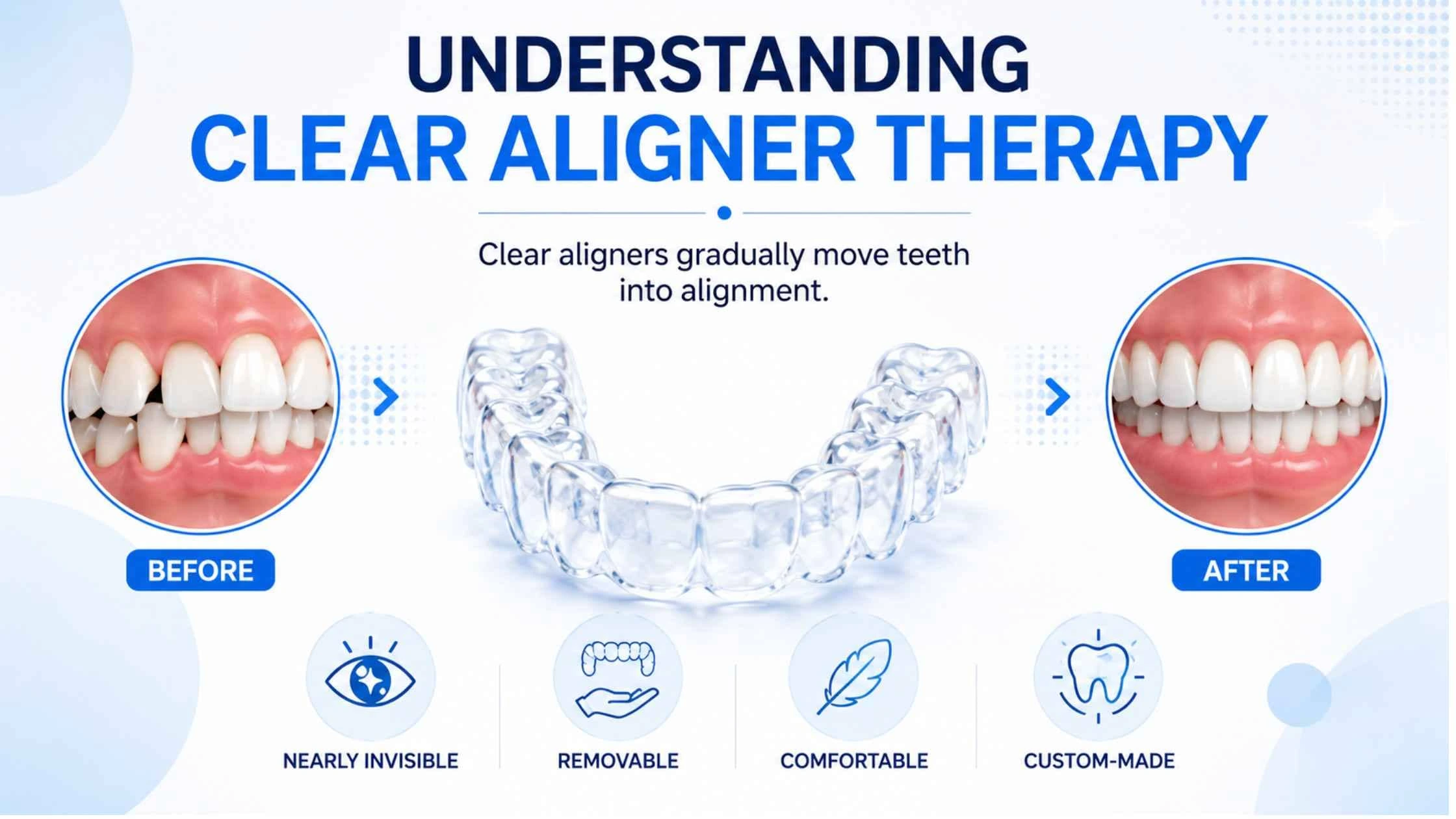
Understanding Clear Aligner Therapy
Clear aligners are invisible custom trays made to gradually shift teeth into the correct alignment. Aligners of course, being removable devices are less cumbersome than traditional braces and allow for much more freedom with eating as well as brushing and flossing.
The treatment process typically includes:
- Digital scanning or impressions
- Treatment simulation
- Custom aligner fabrication
- Sequential aligner wear
- Regular progress monitoring
- Final retention phase
Technology is integral to treatment delivery, but the true success of clear aligners occurs long before treatment even begins, with an accurate diagnosis and comprehensive planning. Wondering whether clear aligners really work? This comprehensive guide explains how aligners move teeth, the science behind treatment, expected timelines, benefits, limitations, and what factors influence successful outcomes
Rising Popularity of Clear Aligners
Research published by Fortune Business Insights indicates that the international clear aligner marketplace surpassed $6 billion in value and is efficiently predicted to develop enough over the coming decade.
There are many reasons for its popularity:
- Improved aesthetics
- Greater comfort
- Reduced dietary restrictions
- Better oral hygiene maintenance
- Digital treatment planning
Yet an increasing demand has also resulted in more direct-to-consumer aligners that may not always be under proper orthodontic supervision. This trend underscores the need to understand the value of orthodontist-led treatment.
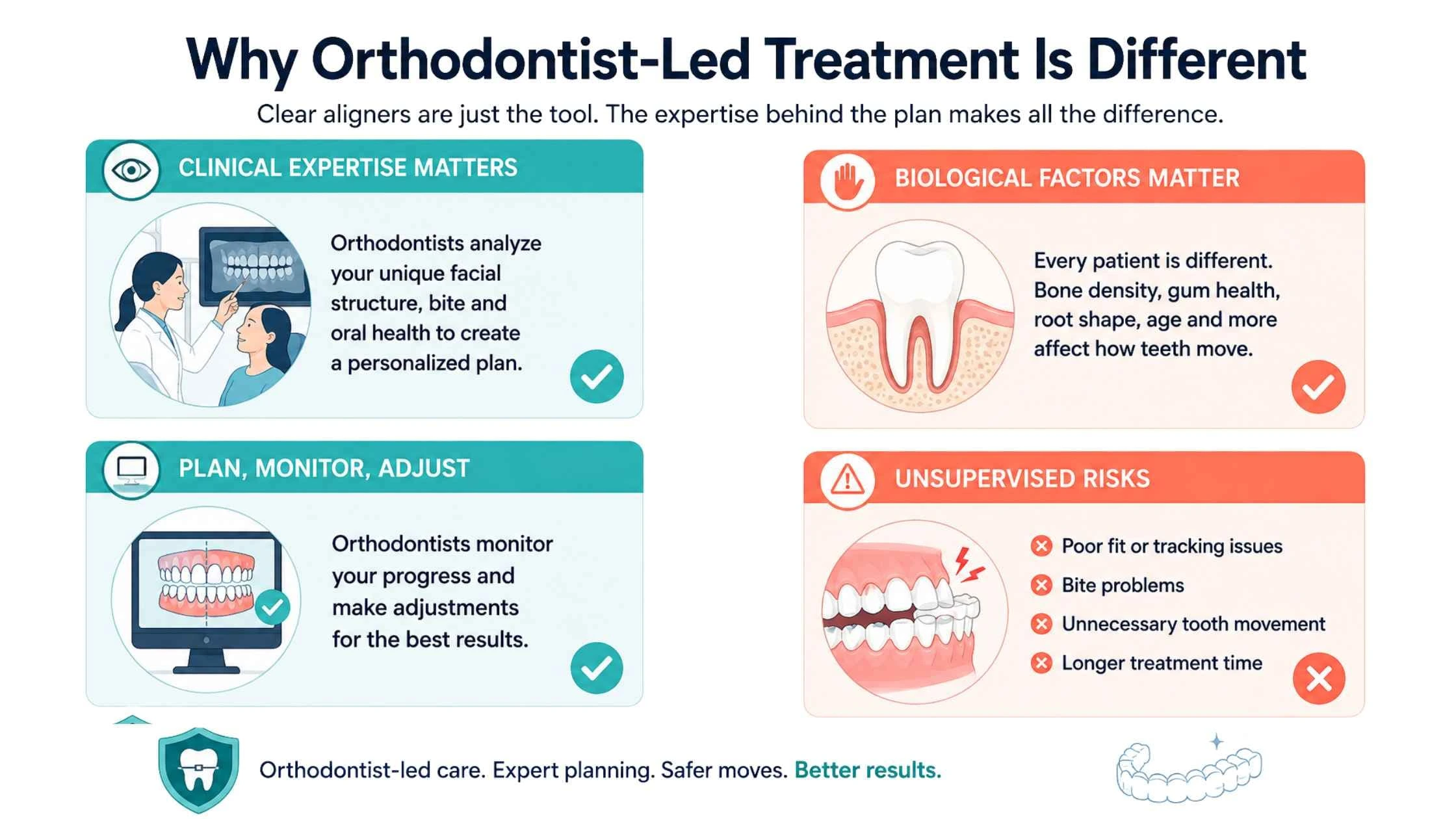
Why Orthodontist-Led Treatment Is Different
Clear aligners are merely tools. Actually knowing where, when and how teeth should be moved is the real skill. Orthodontist-Led, You are assessed with professional supervision during all phases of treatment. This is mainly because orthodontists complete years of specialized education beyond dental school (highlighted in the AAPD video for kids), learning specifically about how teeth move, jaw relationships, bite correction and facial balance.
Rather than dependent on the simulations generated through software, orthodontist apply their expert knowledge to formulate biologically sound and realistic treatment plans. It prevents complications while increasing efficiency and minimizing toxicity in the context of treatment results.
Understand Clinical Expertise Versus Treatment Success
Clinical expertise, one of the most crucial benefits of supervision.
Technology can perform computational simulations for obtaining treatment, but software is not able to represent the biological differences between patients completely. This is due to that, every patient has a different reaction towards orthodontic forces. Factors influencing treatment include:
- Bone density
- Gum health
- Root shape
- Age
- Previous dental work
- Bite function
The key component is also want orthodontists are clinically stronger, since they can speculate on problems rather than react to them when they arrive.
For example:
- Teeth can move more slowly than anticipated.
- Certain movements may require attachments.
- Bite changes may need adjustments.
- Refinement aligners may become necessary.
If these issues are not properly supervised by a professional, treatment outcomes can be compromised.
Orthodontic Diagnosis — The Basis of All Fine Cases
An orthodontic diagnosis is necessary before any aligners are made.
An orthodontic diagnosis involves evaluating:
- Tooth alignment
- Bite relationships
- Jaw positioning
- Facial structure
- Oral health status
- Existing dental restorations
This phase is generally the most underrated but actually one of the crucial elements in being treated successfully. To get it, this ensures that any orthodontic treatment undertaken will manage functional problems as well as cosmetic concerns ensuring the long term opportunities for healthy function. Patients may be treated without a comprehensive diagnosis and have the visible teeth straightened, but they may still have bite issues that are unresolved.
Personalized Treatment Creates Better Outcomes
No two smiles are identical.
This is the reason why personalization plays a very important role in clear aligners therapy.
- Orthodontists customize treatment based on:
- Individual tooth movement requirements
- Bite correction needs
- Lifestyle factors
- Oral health conditions
- Patient goals
A new approach rarely yields the best results.
As a result, orthodontists are able to adjust and optimize aligner strategies based on the complexity of each case for potentially superior, more efficient, and predictable outcomes when treatment is individualized.
Patients often experience:
- Better alignment
- Improved bite function
- Enhanced facial aesthetics
- Greater treatment comfort
The marked benefits of such professional customizations justify the need for it.
Focus on Aligner Treatment Planning
Aligner treatment starts long before you put the very first tray in your mouth.
Treatment planning for aligners is done by designing each phase of the movement through to completion.
When planning aligner treatment, orthodontists ask:
- Which teeth should move first
- Movement sequencing
- Attachment placement
- Interproximal reduction requirements
- Monitoring schedules
- Retention strategies
Well planned movements also serve to optimise the process in a safe and efficient manner. High end software allows for the visualisation of tx, but an orthodontist must decide whether a movement being asked for is actually biologically possible.
Expert Treatment Planning Reduces Risks
The biggest benefit to expert treatment planning is risk mitigation.
Aligner therapy that has not been properly planned may result in:
- Incomplete tooth movement
- Bite problems
- Root resorption
- Gum recession
- Relapse after treatment
Specialised treatment planning by your orthodontist decreases these complications. They constantly monitor progress and adjust treatment when indicated. Studies indicate that results of orthodontic treatment under the supervision of a qualified dentist is typically more predictable and stable compared with unsupervised alternatives.
Technology Helps Orthodontists—It Does Not Replace Them
Modern aligner systems utilize:
- 3D imaging
- Artificial intelligence
- Digital treatment simulations
- Predictive modeling
These are useful tools, but they should not replace human judgment. Ortho propose what movement may be achieved by what teeth, but it is left to the ortho to move them or not. The most successfully merge state-of-the-art technology with clinical expertise and area experience in treatment planning. This synergy of innovation and clinical expertise enables safer, more efficacious treatment experiences.
Monitoring Progress Throughout Treatment
Once aligners have been delivered, treatment does not stop. Honest treatment is undergoing constant observation by the orthodontist.
Follow-up appointments allow orthodontists to:
- Track tooth movement
- Evaluate aligner fit
- Identify complications early
- Modify treatment plans
- Maintain patient compliance
Such assessments help keep the treatment on track. If unexpected development occurs, orthodontists can move into action immediately and rectify it before any trouble gets worse.
Long-Term Stability and Retention
Straightening teeth is only half the battle.
But for results to be retained proper retention strategies must be in place.
Orthodontists evaluate:
- Relapse risk
- Bite stability
- Retainer design
- Long-term maintenance needs
Specialist Tooth Alignment: Who Should Be Treated by an Orthodontist?
While no patient should not be under professional supervision some patients are at a greater risk for developing orthodontic problems.
- Severe crowding
- Complex bite issues
- Crossbites
- Open bites
- Deep bites
- Previous orthodontic relapse
- Missing teeth
- Restorative dental work
Such situations often necessitate complex aligner treatment planning and bespoke solutions that only a trained orthodontist can accomplish. Understanding proper case selection is essential for successful clear aligner outcomes. Explore how orthodontists evaluate malocclusions, biomechanics, and patient suitability before beginning treatment.
Conclusion
Clear aligners are an innovative means of modern orthodontics that allows your patients to improve their smiles in a discrete, convenient way. Fortunately, successfully treating the issue is much more involved than just a series of trays. Accurate orthodontic diagnosis, advanced clinical skill Practice-based and attack treatment personalization detailed aligner therapy planning professional monitoring can be the basis of effective aligners therapy.
Together, technology continues to change and improve but will never be better than the judgment, experience, and decision-making skills of a well-trained orthodontic provider. Orthodontist-led treatment is led by the expertise of an orthodontist at every stage of care, delivering safer treatment and enhanced results that last a long time.
For the achievement of individualized and optimally effective clear aligner treatments, one of the most significant decisions patients can make is to have orthodontic supervision by an experienced professional. Whether you’re exploring clear aligners for yourself or looking for advanced orthodontic solutions for your patients, the expert team at Elencia Aligners is here to help. With orthodontist-led treatment planning, advanced digital workflows, and personalized care, Elencia Aligners delivers predictable, comfortable, and confident smile transformations.
FAQs
Q: Definition of Orthodontist-Led Treatment of Clear Aligner Therapy
Orthodontist-Centric Treatment: A qualified orthodontist oversees diagnosis, treatment planning, treatment and retention with an ortho aligner. This assists with safely moving teeth in a predictable manner.
Q: Why you should get an Orthodontic diagnosis before starting on Aligners!
An orthodontic diagnosis recognizes underlying bite problems, jaw relations, location of teeth and the state of oral health. Diagnosis is important to make sure the treatment works on both aesthetic and functional problems and sustains for a longer time.
Q: How do you personalize treatment to get better results with aligners?
Customized treatment involves aligner therapy that is customized to the patient’s unique dental structure, bite and goals. This approach is tailored to enhance efficiency, comfort and predictability, and ultimately the treatment outcomes.
Q: Can clear aligners work by themselves without orthodontist supervision?
Some direct-to-consumer options are available, but the absence of professional supervision could lead to moving teeth incorrectly, bite problems between teeth and not completing the treatment. From there, you can correct these issues early through orthodontist supervision.
Q: What is Aligners treatment Planning?
Treatment planning for aligners involves sequencing of movements, use of attachments and bite correction strategies combined with monitoring schedules along with retention protocols to achieve precise and stable treatment outcomes.
Q: How often do patients see their orthodontist during aligner treatment?
Most patients have review appointments every 6–12 weeks based on treatment – more complicated treatments would lead to shorter follow-up period. Orthodontists can keep track of monitor progress, properly fit the aligners and make adjustments as necessary during these visits.