
The New Era of Precision Orthodontics
Orthodontics is undergoing a transformative shift, from mechanical correction to digitally engineered precision. Clear aligners have revolutionized treatment by offering aesthetics, comfort, and convenience. Yet, behind every successful smile lies something far more critical than the aligner itself: advanced aligner planning.
Despite rapid technological adoption, predictability remains a central concern. Clinical data shows that only 70–75% of clear aligner treatments achieve outcomes exactly as planned, while 25–30% require refinements or additional corrections.
Even in optimized clinical settings, success rates range between 80–90% for mild to moderate cases, reinforcing the importance of precise planning. This gap between expected and actual outcomes is not a failure of technology, it is a reflection of planning quality.
“In aligner therapy, the outcome is not determined by the plastic, it is determined by the plan.”
Modern orthodontics now relies heavily on advanced aligner planning, which integrates clear aligner treatment planning, 3D orthodontic planning, aligner biomechanics, and digital smile planning to achieve predictable, efficient, and personalized results.
What is Advanced Aligner Planning?
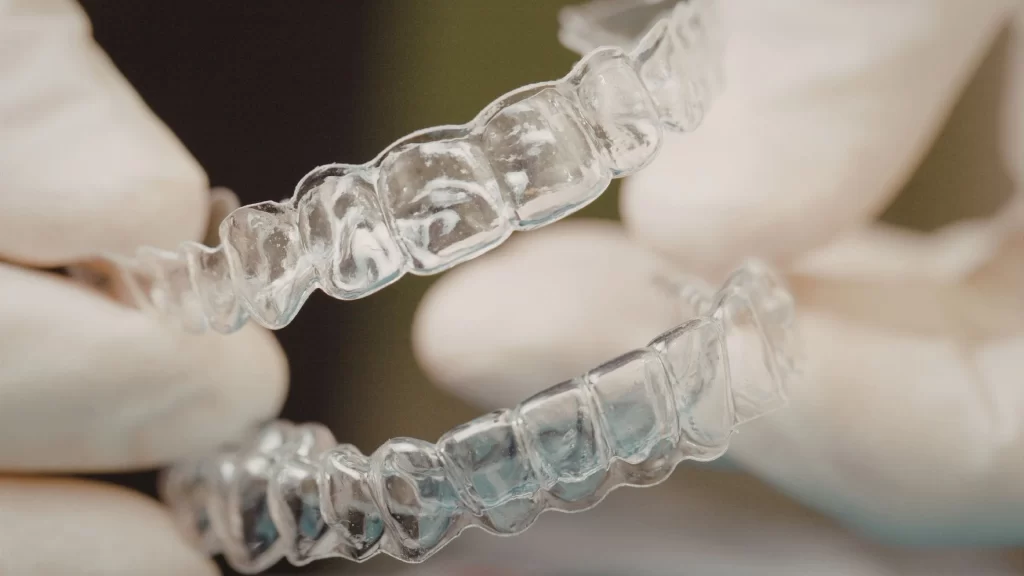
Advanced aligner planning is a comprehensive, data-driven approach that uses digital tools, biomechanical principles, and predictive simulations to design orthodontic treatment with high precision.
Unlike traditional clear aligner treatment planning, which may rely on linear staging and standard protocols, advanced planning incorporates:
- Root-level movement tracking
- Staging optimization based on tooth type
- Force system design using aligner biomechanics
- Aesthetic outcome mapping through digital smile planning
This integration ensures that every stage of treatment is biologically feasible and clinically predictable.
Why Predictability is Still a Challenge
Even with cutting-edge software, orthodontic treatment is influenced by biological variability and patient behavior. Studies highlight several limitations:
- Complex rotations (especially canines) show lower predictability
- Vertical movements (intrusion/extrusion) remain difficult
- Patient compliance significantly affects outcomes
For example, patients wearing aligners 22+ hours daily achieve 85–90% success, while those with poor compliance see success drop to 40–50%.
Additionally, research indicates that tooth movement often lags behind digital predictions, emphasizing the need for overcorrections and refined staging in 3D orthodontic planning.
The Core Pillars of Advanced Aligner Planning
1. Clear Aligner Treatment Planning
At the foundation lies clear aligner treatment planning, where clinicians define movement sequences, attachment placement, and treatment duration.
Advanced planning enhances this by:
- Segmenting movements into biologically manageable steps
- Anticipating difficult movements (e.g., rotations, torque)
- Incorporating refinements into the initial plan
2. 3D Orthodontic Planning
3D orthodontic planning allows clinicians to simulate treatment outcomes before they begin.
Using intraoral scans and digital models:
- Tooth movement is visualized in all three dimensions
- Interference and collisions are detected early
- Root positioning is considered, not just crown alignment
Emerging AI systems can now evaluate treatment feasibility and optimize staging protocols, improving planning accuracy by over 20% in simulation models.
3. Aligner Biomechanics
The science of aligner biomechanics determines how effectively planned movements translate into real-world results.
Each aligner typically moves teeth by approximately 0.25 mm per stage, requiring precise force control and sequencing.
Advanced planning incorporates:
- Attachments for force direction
- Interproximal reduction (IPR)
- Overcorrection strategies
“Biomechanics is where digital intention meets biological response.”
Without proper biomechanical understanding, even the most sophisticated clear aligner treatment planning will fall short.
4. Digital Smile Planning
Digital smile planning bridges function and aesthetics.
It allows orthodontists to:
- Design smiles based on facial proportions
- Align treatment goals with patient expectations
- Visualize final outcomes before starting treatment
This not only improves predictability but also enhances patient communication and acceptance.
A Detailed Example: Advanced vs Conventional Planning
Case: Moderate Crowding with Canine Rotation
Patient Profile:
- Age: 26
- Condition: Moderate anterior crowding, rotated canines
Conventional Planning Approach
- Standard clear aligner treatment planning
- Linear staging (uniform movement per aligner)
- Minimal attachment strategy
Outcome:
- Partial correction of canine rotation
- Additional refinement aligners required
- Extended treatment time by 3–4 months
Advanced Aligner Planning Approach
Using advanced aligner planning, the clinician applies:
✔ Detailed 3D orthodontic planning with root control
✔ Slower staging for rotational movements
✔ Optimized attachments for canine derotation
✔ Planned overcorrections
✔ Integrated digital smile planning for aesthetic alignment
Outcome:
- Accurate correction within planned timeline
- Minimal refinements
- Improved patient satisfaction
This example clearly demonstrates how advanced aligner planning improves both efficiency and predictability.
Technology Driving the Future
The integration of AI and digital workflows is redefining orthodontics:
- AI-assisted simulations predict treatment outcomes
- Automated landmark detection improves planning precision
- Multi-criteria evaluation systems assess biomechanics and staging
These innovations are making 3D orthodontic planning faster, smarter, and more reliable.
Brands like Elencia Aligners are aligning with this evolution by focusing on digitally driven workflows and precision-based treatment planning, helping clinicians achieve more consistent results in modern orthodontic practice.
Key Benefits of Advanced Aligner Planning
1. Improved Predictability
Better staging and biomechanics reduce deviations from planned outcomes.
2. Reduced Treatment Time
Efficient planning minimizes refinements and delays.
3. Enhanced Patient Satisfaction
Accurate results and shorter treatment durations improve patient experience.
4. Better Management of Complex Cases
Advanced protocols make it possible to treat cases previously considered difficult for aligners. Treatment plan optimization plays a critical role in clear aligner therapy by refining initial digital setups into clinically accurate, personalized strategies that improve predictability and long-term stability.
Challenges That Still Remain
Even with advanced aligner planning, certain limitations persist:
- Severe skeletal discrepancies may require hybrid approaches
- Biological variability affects tooth movement
- Patient compliance remains critical
However, continuous advancements in clear aligner treatment planning and aligner biomechanics are steadily reducing these limitations.
The Future of Advanced Aligner Planning
The next phase of orthodontics will focus on hyper-personalization and predictive analytics:
- Real-time monitoring using digital scans
- AI-driven treatment modifications
- Fully automated digital smile planning systems
As these technologies evolve, advanced aligner planning will become increasingly precise, making orthodontic outcomes more predictable than ever before. Learn how your smile transformation unfolds step by step with a structured and digitally driven approach, from initial consultation to final results, ensuring precision, comfort, and predictability throughout your aligner journey.
Conclusion
Orthodontics is no longer just about moving teeth, it is about engineering outcomes with precision. Advanced aligner planning stands at the center of this transformation, combining clear aligner treatment planning, 3D orthodontic planning, aligner biomechanics, and digital smile planning into a unified, intelligent system. While clear aligners have changed the patient experience, it is advanced planning that ensures clinical success. Discover the future of orthodontics with Elencia Aligners, offering advanced, comfortable, and nearly invisible solutions for modern smile correction. Designed with precision and backed by expert support, it’s a smarter way to achieve predictable results.
“The future of orthodontics is not just digital, it is predictable by design.”
Have questions or ready to get started? Connect with the Elencia Aligners team to learn more about treatment options, provider partnerships, and how you can deliver better orthodontic outcomes with advanced aligner solutions.